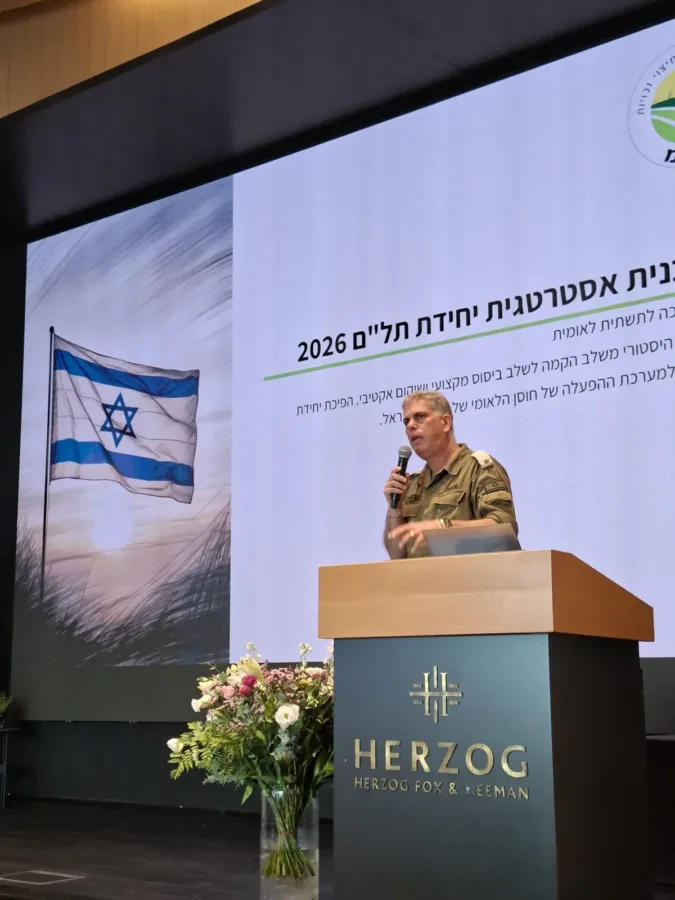
Developed and led by Amiad Taub, the TLM model (Support • Accompaniment • Rights Realization) brings every body that cares for a wounded soldier and their family into one operational system: unified, proactive and fast, with the person at its center.
Principles of the model
Multi-agency integration
Integrated coordination between the defense establishment, the IDF and the Rehabilitation Department, government ministries, local authorities, hospitals and health funds, and the nonprofit sector, as a one-stop shop: a single point of contact for the soldier and the family.
Proactive outreach (push)
The system reaches out to wounded soldiers and their families instead of waiting to be contacted, so needs are identified early, before they become a crisis.
A 360° envelope
Support across every area of life: personal resilience, family stability and employment continuity.
Operational agility
A lean, modular structure that uses technology and AI and manages crises in real time.
Long-term resilience and readiness
Preserving human capital is the model’s key performance indicator.
Predictive Recovery: from reaction to prediction
Predictive Recovery is a trauma-rehabilitation model that moves crisis management from reaction to early prediction.
- Data-driven early detection: tracking leading indicators such as cumulative burnout and disruption to employment continuity.
- Optimal resource allocation: prevention costs less than rehabilitation.
- Multi-dimensional synchronization across the operational, family, community and employment spheres.
- A shorter path back to full functioning.
Bottom line
A unified, proactive and fast operational system with the person at its center, and a crisis-management model built on prediction, not only on response.